Forum Replies Created
-
AuthorPosts
-
April 10, 2015 at 11:46 am #1604
 Gabriel KaronParticipant
I feel like the majority of the rhythmic changes come in the final paragraph – while the beginning is wholly different, the comma use of in the end is perhaps the biggest rhythmic change to the speech. Funnily enough, as much as “under God” changes the thematic elements of the speech, it is perhaps changes the rhythm even more. Because of this, the Nicolay version of the speech contains a certain meter that is almost reminiscent of the declaration of independence.
The biggest thematic change I would argue comes from the difference between “those who gave their lives” in the Bliss version and “those who died here,” in the Nicolay version, “so that the nation might live.” This is highlighted by the absence of the use of “have thus far, nobly advanced.” It gives the Bliss version a sense of necessary sacrifice towards ultimate and inevitable progress, while leaves Nicolay’s with a feeling more of needless and tragic loss that we must not make in vain.
February 6, 2015 at 12:26 pm #1362Gabriel KaronParticipantI would probably agree with the statement that the digital age has affected my reading ability. While I don’t think I am a less skilled reader than before, I feel that if I go a while without doing serious reading and then come back to it, being exposed to digestible video and short article content in the meanwhile, it feels difficult to concentrate on the reading for great periods of time. However, I don’t think this represents a need to remove digestible content from our lives, but rather a need to proactively tone our “reading muscles.”
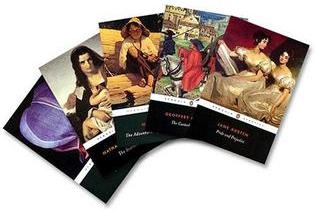
January 26, 2015 at 12:17 pm #1286Gabriel KaronParticipantI feel I do not consciously judge the “value” of a book by its presentation, but rather I make assumptions about how the book should be read based partially on its presentation. For example, the covers of penguin classics (http://upload.wikimedia.org/wikipedia/en/d/d9/Penguin_Classics.jpg) do not do a great job of informing me of their content nor of their quality, but when I pick when up I understand I am reading a text that requires careful reading and analyzation to fully understand, and will read it as such. On the other hand, “teen fiction” is similarly recognizable – usually there are sequels with near identical titles, and they have glossy, colorful covers that “pop.” Though I haven’t read them in a long time, even when I did I would rarely intend to read them with the same amount of thought as I would a text for class.
-
AuthorPosts